Support Groups

Community Support Groups

Warrior Traditions. This free program by Veterans Village of San Diego consists of off-base, confidential support groups for Active Duty, Reserve, National Guard and recently separated combat veterans of Iraq and Afghanistan, that lets them share their experiences and discuss any issues they may have related to their service. Spouses and significant others are welcome to participate. Mondays at Libby Lake Community Center, 4700 North River Rd., Oceanside & Thursdays at Veterans Museum & Memorial Center, 2115 Park Blvd., San Diego. 7-9 pm. Also offering Spouse Night for the loved ones of Iraq and Afghanistan veterans. First & third Tues. of the month, 7-9 pm. www.vvsd.net/warrior.htm; 619-393-2084. 

Are You a Breast Cancer Survivor? Join this support circle and share personal experiences, gain support and meet other people who are in the same situation. English-speaking group meets every first & third Tuesday of the month, 5:30-6:30 pm; Spanish-speaking group meets every second & fourth Monday of the month, 6-7 pm. Vista Community Clinic’s Health Promotion Center, 846 Williamston St. 760-631-5000, ext. 7167.

A.D.H.D. & Behavioral Support Group. Parents and caregivers of children with cognitive and behavioral disorders are invited to join this support group that meets every second & fourth Thursday of the month, 6:30 pm. Free. Skyline Church, Rm. 410, 11330 Campo Rd., La Mesa. 619-660-5000 or 619-885-8315. 
 
Expression Sessions. Coping with the loss of a loved one? Join this support group (for ages 7-17) by the Families Helping Families program of The Jenna Druck Foundation that uses art to help participants express their thoughts and feelings of grief. Second & fourth Thursday of the month, 6:30-8 pm. Free. Advance registration required. 2820 Roosevelt St., Ste. 200, San Diego. Visit http://jdf-fhf.org/schedule/expression-sessions or call 619-294-8000. 
 
Breast Cancer Patient Education & Support Group. Fourth Wed. of the month, 2-3:30 pm. Moores UCSD Cancer Center, Rm. 2007, 3855 Health Sciences Dr., La Jolla. For details, call 858-822-6201.
 
Postpartum Support Groups. Have the “baby blues?” Meet other moms with the same feelings and fears that you’re currently experiencing. Visit www.postpartumhealthalliance.org for information about support groups in Clairemont, Kensington, La Jolla, La Mesa, Serra Mesa and Sorrento Mesa. Most of the support groups are free. Need resources about postpartum depression? Call the Postpartum Health Alliance at 619-254-0023.
 

NAMI Connection. The National Alliance on Mental Illness offers this weekly support group for adults that presents a relaxed approach to sharing the challenges and triumphs of coping with mental illness. Thursdays, 6-7:30 pm. Free. 4480 30th St., San Diego. www.namisandiego.org; 619-543-1434.

California Bipolar Foundation offers support groups for parents of children and young adults affected by bipolar disorder. First Tues. of the month, 6-8 pm in Carmel Valley (RSVP to This e-mail address is being protected from spambots. You need JavaScript enabled to view it ); third Wed. of the month, 10 am-noon in Rancho Santa Fe (RSVP to This e-mail address is being protected from spambots. You need JavaScript enabled to view it ); second Thurs. of the month, 10 am-noon in Poway (RSVP to This e-mail address is being protected from spambots. You need JavaScript enabled to view it ). 858-342-0327.

Lung Cancer Support Group. Third Wed. of the month, 11 am-12:30 pm. Facilitator: Steven Hickman, PsyD. Moores UCSD Cancer Center, Rm. 3106, 3855 Health Sciences Dr., La Jolla. For details, call 858-822-6868.  


CASA Volunteers Program

By some counts, San Diego’s foster youth are in crisis. Each month, 150-200 children enter the foster care system for the first time, and approximately 7,500 children go through the system each year. Social workers and court systems are overwhelmed and often, little time can be dedicated to each child’s case.

San Diego’s Voices for Children is a ray of light within the foster care system. This nonprofit organization trains volunteers to become Court Appointed Special Advocates (CASA) for foster children.

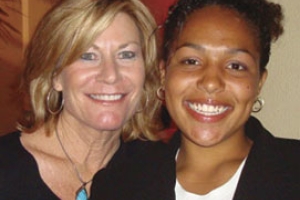
casa voluteersWhat is a CASA?

A CASA is a volunteer who is specially trained to advocate for children and youth in the foster care system. A CASA is assigned to a specific child or sibling group for the duration of their case. In many instances, a CASA is the only person in a child’s life who is not paid to be there.

“This makes a huge difference to the children—to have someone who volunteers his time to be with them,” says Cindy Charron, Voices for Children program manager.

What Does a CASA Do?

There are two sides to the role that a CASA plays in the life of a foster child. On the legal side, CASAs have the ability to advocate for the child in court and school. This means that a CASA:
   • Writes detailed court reports
   • Appears at court hearings
   • Investigates and makes recommendations about the permanent placement of a child or sibling group
   • Follows a child’s progress through placements
   • Facilitates communication with everyone involved with a case
   • Makes a minimum commitment of 18 months

CASAs also play a role that combines mentor, friend and family. A CASA has ongoing contact with his assigned child or sibling group in person and on the phone. This is the precious one-on-one time that enables a CASA to draw out a child’s interests and provide the judge with current and personal information about the child—information that most social workers, foster parents and attorneys may not have time to observe or collect.

Do CASAs Make an Impact?

According to the County of San Diego’s Commission on Children, Youth and Families, studies conclude that for every dollar spent on “prevention” today, seven dollars are returned to the public.

By investing in CASAs for children who are most at-risk for drugs, crime and school failure, communities will save seven times this investment by not having to pay for welfare, MediCal, police, prison and remedial education services in the future.

Kim Penny, Voices for Children vice-president of marketing and development says,“By helping foster children grow up to be self-sufficient, contributing members of society, CASAs help the whole community.”

Program Effectiveness: Proof Positive!

The following studies show how CASA programs positively impact children in the foster care system.

   • CASA Effectiveness Studies Review
A recent review of 14 CASA-effectiveness studies
     by researchers at the University of California, Fresno Medical Education Program noted:

  1. Children with CASAs are more likely to be adopted.
  2. Children with CASAs are less likely to re-enter the child welfare system.
  3. Twenty percent more children with CASAs passed all school courses and were significantly less likely to be expelled.
  4. Children with CASAs scored significantly higher than other foster children on protective factors scales (sense of acceptance, controls against deviant behavior, positive attitude for the future, and ability to work with others).

       Read more: www.nationalcasa.org/about_us/studies.html

   • California Blue Ribbon Commission on Children in Foster Care
Concluding its two-year study, the Commission had several suggestions for improving outcomes for children in foster care including “CASA programs should be available in all counties.”
Read more: www.courtinfo.ca.gov/jc/tflists/bluerib-rec.htm

   • Pew Commission on Children in Foster Care: “Fostering the Future: Safety, Permanence and Well-Being for Children in Foster Care” 2004 Report
“Even with the active participation of children and families, judges and attorneys will not always have the time and resources needed for the courts to make fully-informed decisions.  We therefore recommend an expansion of the successful, community-based CASA program. ”
Read more: http://pewfostercare.org/docs/index.php?DocID=47

Ronni Rowland is a mother of two and freelance writer.